One minute with Terry. Turn the sound on.
The street changed underneath you while you stood still on it. You were never the problem. I stood behind the counter for thirty-one years and watched it happen, week by week, basket by basket.
This is a book about running a house the way your mum ran hers, in today's shops, at today's prices.
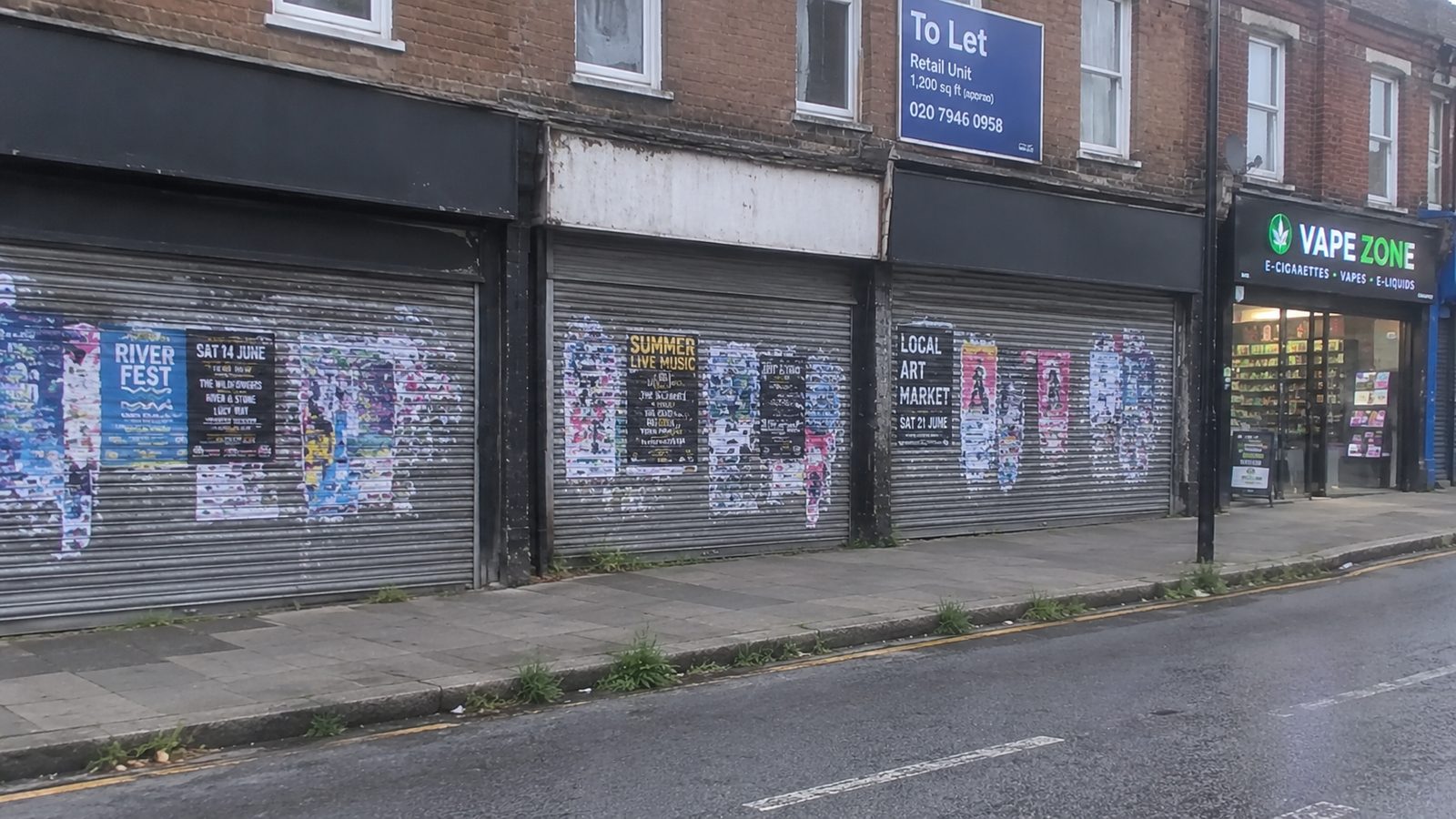
Go and stand on your high street on a Tuesday morning. Half the windows are boarded. The rest are vape shops and Turkish barbers. That did not happen by accident, and it did not happen because you stopped caring.
The shops were moved to a retail park on the ring road, because the land was cheaper and the parking was free. The factories were moved a good deal further than that. The council signed it off and called it regeneration. After that the money that used to stay in the town stopped staying in it, and went off to a head office you will never visit.
Then came the part that still gets me. Having moved the shops, they turned round and sold you the idea that you were the one who had got it wrong. That you ate wrong. That you spent wrong. That you should have put more by.
You did not get worse at running a house. The house got harder to run. You were shifted to the wrong side of the counter and nobody had the manners to tell you the counter had moved.
$47 once · 60-day money-back · yours forever
An illustrated book · 35 chapters in 8 parts · A PDF you download and keep
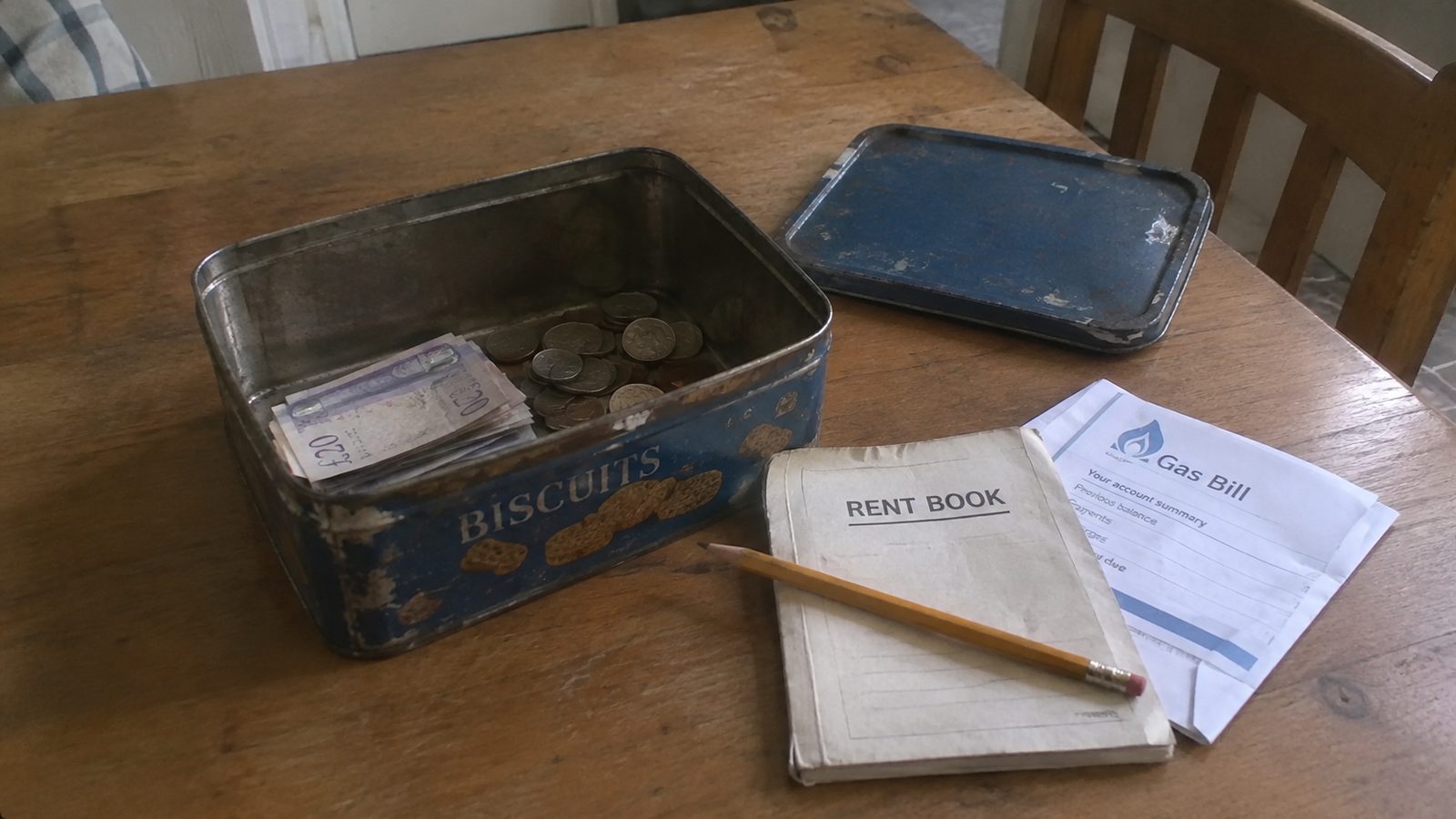
In 1975 a working family had a rent book, a gas bill, an electric bill, the rates and a telly licence. That was the lot. There was no direct debit for anything else, because there was nothing else to pay a direct debit to.
Every line below is a bill that was not there. Not one of them replaced anything. They were all put on top, one at a time, a few pounds at a time, over fifty years, and nobody ever sat you down and added them up for you.
So here they are, added up.
Put the three media lines together and it is £36.97 a month, which is £443.64 a year, for things that did not exist in your mum's kitchen.
The telly licence, the bill everybody in Britain moans about, is £180 a year. It is now one of the smallest bills in the house.
Where these come from: Ofcom pricing report, February 2026 · Netflix, Disney+ and Spotify UK price pages, checked 11 September 2026 · TV Licensing fee from 1 April 2026 · Which?, extended warranties, June 2022 · Citizens Advice, March 2024 · Moneyfacts, February 2026 · Bank of England money and credit, January and July 2026 · Vodafone, first UK mobile call · ONS Consumer Prices Index. Prices and rates move. These were right on 11 September 2026.
$47 once · 60-day money-back · yours forever
The parts are uneven because the material is uneven. Some of it needed seven chapters and some of it needed two. I have not padded a part out to make the numbers look tidy.
You are on the wrong side of the counter now. Here is how to get back on the right one.
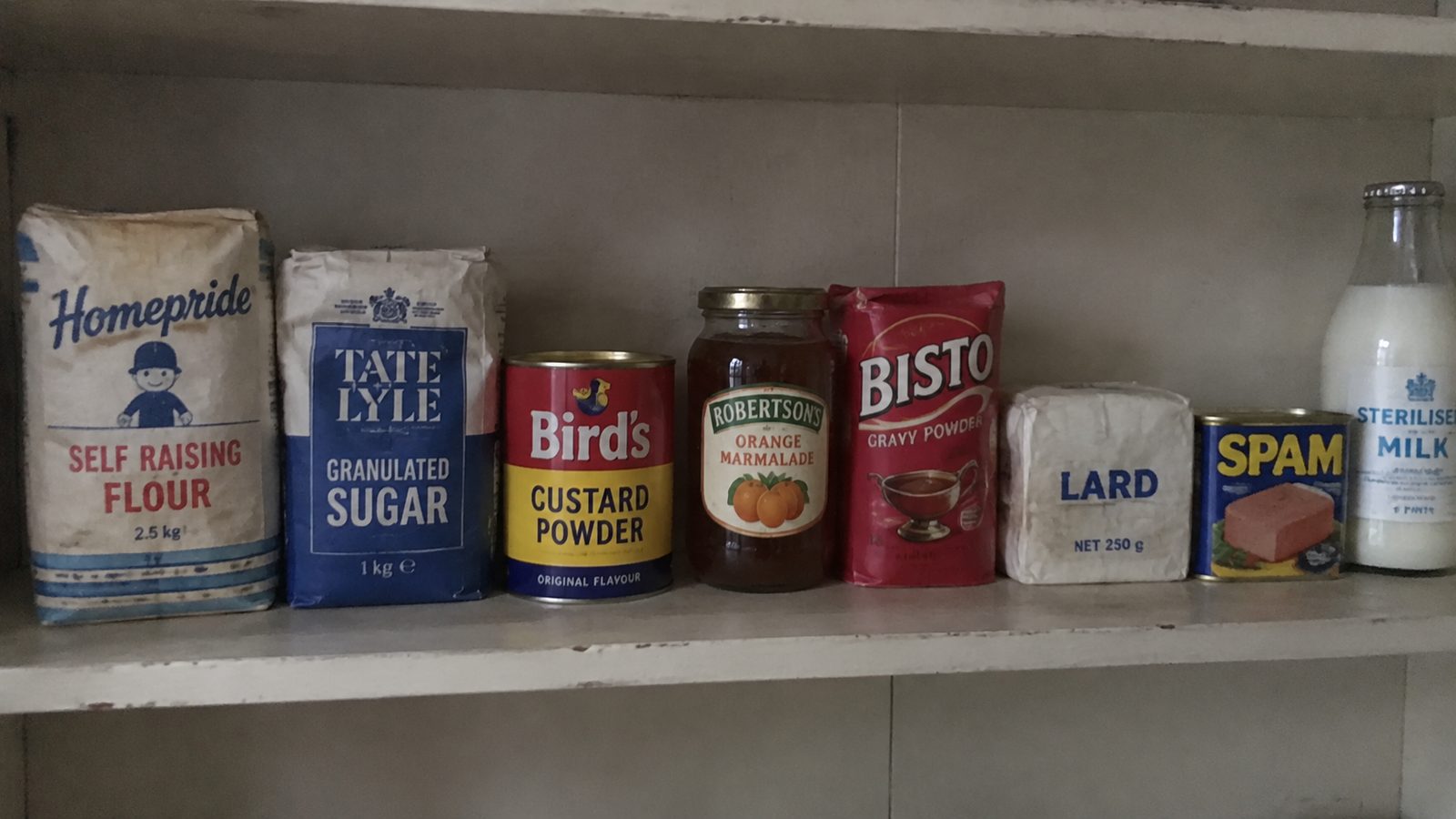
What a family ate every week, what it cost then, and what it costs to do now.
Nothing was taken away. Things were only ever added. Here is the list.
Forty years, not three. What still lasts, and how to tell before you pay.
Forty bottles do the work four things used to do, and you are paying for the other thirty-six.
Twelve degrees, a clothes airer, and a house that ran on almost nothing.
The walk, the sleep, and the rules your mum never broke.
The knowledge does not have to die with you.
Nobody does all thirty-five. Most people will take four or five things out of this and keep them for the rest of their lives, and that is the whole job done. Read the part that matches whatever is annoying you this week and leave the rest until it is wanted.
$47 once · 60-day money-back · yours forever
A price on its own is a party trick. Your nan paid four pence for a loaf, and that means nothing at all until somebody tells you what four pence was.
So every old price in here has a 2026 figure beside it, worked out with the Office for National Statistics index, with the working shown so you can check me. On that measure a 1975 pound is worth £8.36 today. On the older measure, the one the newspapers like, it is £12.82. The book uses the first one, tells you which one it is using, and where the two answers point in opposite directions it gives you both and lets you make your own mind up.
The same rule goes for the memory. Where the records and the memory pull against each other, the book says so out loud instead of picking whichever one flatters us. We walked more then because half the country had no car, not because we were better people. That is in there as well, and it cost me a chapter I liked.
Real names, real dates, real shops. If I have got something wrong, write and tell me and I will put it right in the next printing.
$47 once · 60-day money-back · yours forever
These are comments left under the videos, word for word, with the number of people who agreed with them.
"Shopping centres destroyed our high streets…"
"The food industry is a criminal cartel."
"I ventured into the city centre of my hometown Coventry yesterday, nothing but fast food outlets, sprinkled with the usual vape shops, nail bars and barbers. It's horrendous"
"Nails were bought by the pound/ounces in hardware stores. There was zero plastic waste."
"One thing to remember is that those electric items, would last for 40 years plus. One would be lucky if today's items last more than 3 years."
"That was spot on I lived that life in the 70's and still cook from scratch today."
"Thank you for your hard work. I, for one, have taken a step back to my childhood habits/ lifestyle. It's made me able to semi retire in my 50s and I feel a lot healthier for it."
Those are comments about the videos. They are not reviews of the book, because the book has only just been finished and nobody has read it yet. When there are buyer reviews they will go in this spot with the names on them, and not before. I am not going to invent a star rating and hope you do not check.
$47 once · 60-day money-back · yours forever
I'm Terry Lomax. I stood behind the counter of a corner shop for thirty-one years, so I watched what Britain put in its basket change week by week.
I am not going to tell you about your own life. You lived it and I did not live yours.
What I have is the other side of the till. From back there you see a thing an ordinary shopper never sees, which is the whole street's shopping, every week, for thirty-one years. You watch the tins get smaller while the price card stays the same. You watch the loose stuff go into packets. You watch a woman who bought a quarter of ham every Friday start buying it sealed in plastic, because the counter she bought it over has gone.
I never had a till roll that lied to me. That is the whole of my qualification, and it is the only one this book needed.
Everything in the videos, in order, with the prices filled in.
Watch the channel
$47 once · 60-day money-back · yours forever
This whole page is about money that leaves your account every month without being asked. It would be a poor show if the book did the same thing.
35 chapters · 8 parts · 3 printable sheets · A PDF you keep
A lot of it started there. The videos are eight minutes each and they come out in whatever order I happen to make them. The book is the whole lot in order, with the prices filled in, the sources named, and a list at the back so you can find a thing again in two years' time.
You are paying for it being gathered up and put straight, not for a secret. If you would rather watch the videos and keep your own notes, do that. They are free and they are staying free.
Neither am I. I like a warm bedroom and I am not putting a tin bath in front of the fire for anybody, and I would not ask you to.
This is not fancy dress. It is a set of habits that worked, tested against what things cost in a 2026 British shop. Take the four that suit your house and leave the rest where they are.
Yes. Nothing in it needs you to own the place. There is no drilling, no boiler, no builders and nothing your landlord has to agree to.
The parts that save the most are the shopping, the cooking and the money going out of the account every month, and none of that cares whose name is on the deeds. Two of the eight parts are about things that move house with you.
A PDF. That is a file you download once and open like a letter. No app, no login, no subscription and nothing to install.
You can read it on a phone, a tablet or a computer, and you can print it on paper if you would rather hold it. If you get stuck, write to orders@terrylomax.com and a real person will walk you through it.
You have sixty days. One email to orders@terrylomax.com and the money goes back to your card the same day, no questions asked, and you keep the book either way.
I am not going to chase a pensioner for $47. If it was not what you wanted, that is my fault and not yours.
I am not telling you about your life. You lived it and you know it better than I ever will. What I have is the other side of the counter and the paperwork that goes with it.
Where what I have written disagrees with what you remember, the book says so plainly instead of talking over the top of you, and more than once it is the records that come off worse. There is a chapter where the records flatly contradict something we all believe about the seventies, and it is in the book anyway, because leaving it out would have been a cheat.
If you find something wrong, write and tell me. I would rather be corrected than be wrong in the next printing.
The water bill. There was one in 1975. The Water Act 1973 set up ten water authorities and they started billing houses in 1974. What is new is the meter, not the bill. Metering was still only about a third of households in 2008.
Council tax. It only dates from 1993, but it replaced the poll tax, and the poll tax replaced the rates, and the rates were being paid in 1975. The name and the basis changed three times. The bill did not appear out of nowhere. I would rather leave two good lines out than have you catch me putting one in that does not belong.
Good. Some of you have none of the top two. Some have four of the bottom five and a gym on top. The total that matters is not the one I have written. It is the total of the lines that apply to your house, and only you can do that one.
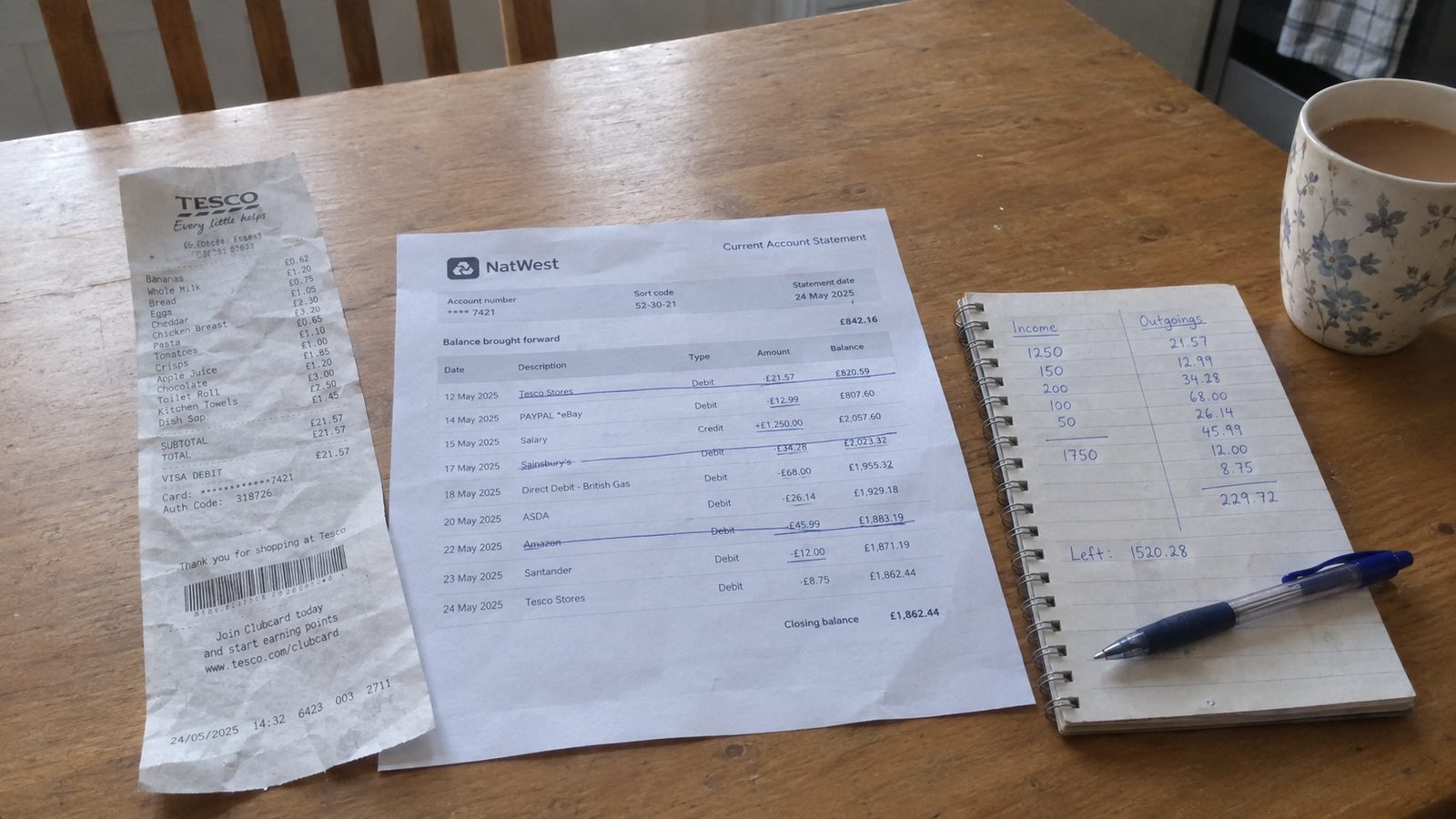
Get the last three months of your bank statement out and mark the ones that leave every month. Not the shopping and not the petrol. Only the ones that go out on their own, on the same date, whether you used the thing or not. Three months will find the monthly ones. Twelve months will find the yearly ones as well, and those are the ones people forget about. Citizens Advice found that in a single year British people paid £688 million for subscriptions they were not using, and that thirteen million of us had taken one out without meaning to.
Then add up what you have marked and multiply it by twelve. That is the number that changes what you do next. It is not my number and I cannot guess it for you.
£1,000 on the average British credit card, paying only the minimum each month, takes twenty years and two months to clear and costs £3,277. The same £1,000 at £100 a month is gone in twelve months and costs £1,172. Same debt, same card. The only thing that changed is what leaves the account each month.
The average advertised rate on a British credit card was 35.8% in February 2026, the highest since Moneyfacts started keeping the record in 2006. The rate people were actually charged across the whole market was 21.75% in January 2026. Both figures are true. They describe two different sorts of borrower, and the higher one is aimed at whoever has the least room to argue.
This is information, not advice. Before you do anything at all about money you owe, speak to Citizens Advice, StepChange on 0800 138 1111, or MoneyHelper. They are free, they are independent, and they will not sell you a thing.
A second volume on the week of meals, cooked and priced properly, and a printed edition, because that is what people keep asking for.
Anybody who buys this one gets told first and pays less. You do not have to do anything to get that, it comes to the email address you bought with.
$47 once · 60-day money-back · yours forever
You cannot put the ironmonger back on the corner. I would if I could, and I would put the fishmonger back next door to him.
What you can have back is the part that was always yours, which is how the house is run on the inside of your own front door. That was never taken off you. It just stopped being taught.
Leave it another month and the same money goes out of the account in the same direction, to people who are relying on you not looking.
$47 once · 60-day money-back · yours forever